
Rwitajit Majumdar
Kumamoto University, Japan
C4: ICCE Sub-Conference on Technology Enhanced Learning for Mobility of Learners and Learning Experiences (TEML)
Learning in the Loop: Designing Human – AI Experiences Across Digital and Physical Spaces
Learning experiences today are increasingly distributed across digital and physical spaces, where learners, teachers, facilitators, digital platforms, AI agents, and physical devices continuously interact. When such experiences are carefully designed, they can support not only predefined learning outcomes but also broader learner goals such as reflection, collaboration, agency, and self-regulation. The rapid evolution of generative AI, new sensor and actuator technologies, and the growing availability of multimodal data streams provide the potential to design mobility of learning experiences across digital and physical spaces and to gather evidence of their pedagogical value.
In this talk, I introduce the GOAL and LA-ReflecT platforms as example data-driven ecosystem for crafting learning experiences that connect instructional design, technology design, and learning analytics. I will discuss how the platforms support the collection and interpretation of multimodal learning data across online and physical spaces. Then I share how co-designed services such as GenAI-supported reflection, computer vision-based analysis, robot and IoT integration, and analytics dashboards were embed into learning activities. Rather than viewing data and AI as add-ons to education, this talk opens a conversation on how learning experiences can be intentionally designed within a data-rich ecosystem, where technology supports pedagogical orchestration, meaningful learner engagement and potentially discover new ways of learning.

Dr. Rwitajit Majumdar is an Associate Professor at the Research and Educational Institute for Semiconductors and Informatics (REISI), Kumamoto University, Japan, in the Division of Instructional System Studies. Rwitajit heads the Learning Analytics Lab, focusing on data-driven services for reflective and self-regulated learning. Integrating data from multiple sources to create a meaningful learning experience is challenging. In his research collaborations, he co-designed online learning platforms such as GOAL and LA-ReflecT, in which data is used to develop services for educators and learners. Those systems are implemented in classrooms across Japan, Taiwan, and India to conduct evaluation studies in language learning, STEM, and programming education, and to bridge online and physical learning activities. He served as co-chair of tracks at international conferences (APSCE ICCE, IEEE ICALT, SOLAR LAK, ISLS) and is on the steering committee of EDUsummIT. Currently Rwtajit is an Associate Editors of Smart Learning Environments (IF: 17.9) and Technology Knowledge and Learning (IF: 4.2) and in the editorial board for International Journal of Computer Supported Collaborative Learning (IF: 6.8). For his research contribution and technology innovation, he was awarded 2023 IEEE TCLT Early Career Researcher Award in Learning Technologies, by IEEE Technical Committee for Learning Technology and 2023 APSCE Early Career Researcher Award by Asia Pacific Society for Computers in Education. Follow further at rwito.info
Ben Chang
National Central University, Taiwan
C2: ICCE Sub-Conference on Computer-Supported Collaborative Learning (CSCL) and Learning Sciences
From Computer-Supported to AI-Augmented Collaborative Learning: Five Essential Components for Transforming the LMS from a Management Tool into a Learning Partner
Learning management systems (LMSs) have long served primarily as management tools for organizing courses, administering assignments, and recording student performance. In collaborative learning contexts, these functions remain essential. However, with rapid advances in AI technologies, an LMS has the potential to evolve from a management tool into an AI-LMS that supports domain experts in designing and facilitating instruction, as well as learners throughout the learning process. This talk presents a conceptual framework for an AI-augmented learning management system (AI-LMS) comprising five essential and interconnected components: (1) AI-generated content and curriculum, (2) pedagogy and feedback strategies, (3) learner and group profiles, (4) learning companions, and (5) learning communities. With the active involvement and oversight of domain experts, the AI-LMS is built using a harness engineering approach that integrates AI models, digital tools, learning data, operational rules, and feedback loops. This integrated approach enables the system to generate and organize appropriate learning resources, support individual and collaborative learning activities, connect learners with peers and learning communities, and provide timely, targeted, and actionable feedback. The talk will demonstrate a working AI-LMS and use a concrete learning scenario to illustrate how these five components interact across individual, group, and community levels to form a continuous cycle of learning, interaction, feedback, and adaptation. Although an LMS remains an important platform for collaborative learning, transforming it into an AI-LMS requires more than simply adding isolated AI functions. An appropriate harness engineering approach is needed to connect and integrate these five components effectively, enabling an AI-LMS to become a genuine partner in teaching and learning.
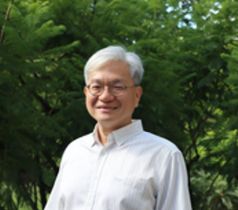
Dr. Ben Chang serves as Dean of the College of Liberal Arts and is a Professor in the Graduate Institute of Learning and Instruction at National Central University, Taiwan. His research spans learning technologies, computer-supported collaborative learning, social learning networks, and AI-enhanced learning. Building on his early work on EduCities – a pioneering model of an Internet-based learning society – he co-founded wikiSchool, an open social learning network designed to foster collaborative and self-directed learning.
Shen Qiao
The Education University of Hong Kong
C5: ICCE Sub-Conference on Educational Gamification and Game-based Learning (EGG)
Not Just Fun, but Learning: Teacher Uptake of Gamification and Gamified GenAI Chatbots in Primary English Classrooms
Gamification refers to the incorporation of game elements in non-gaming contexts. It has attracted considerable attention from educators, yet studies suggest a rather low adoption rate in authentic classrooms. Attracting in-service teachers to design and use gamification is therefore crucial to further enhance students’ language learning experiences. This talk examines teachers’ perceptions of their uptake and sustainable use of gamification, drawing on a co-design study with four Hong Kong primary school ESL teachers and demonstrating the gamified applications they produced. It shows how different gamified activities shape buy-in, and the dilemmas of moving gamification from a fun add-on to a regular part of lessons. Given the rapid advancement of generative AI, the talk also considers how gamification can be embedded in a GenAI chatbot to support young learners. A second study illustrates this in practice. Upper primary grade students write as junior agents inside a mission-based storyline, collaborating with a chatbot character to master the “show, not tell” descriptive technique. Rather than layering gamification on top of writing, the design builds it into the task: students’ missions, their chatbot partner and their rewards are all part of writing the report. In closing, a set of design principles for gamified learning environments will be shared.

Dr. Shen Qiao (Maggie) is an Assistant Professor in the Department of English Language Education at The Education University of Hong Kong. Her research centers on gamification and AI literacy, exploring how game-based learning and GenAI technologies can transform learning experiences. She designs and evaluates theory-driven, evidence-based interventions, particularly gamified and AI enhanced approaches to foster learner engagement, motivation, and cognitive outcomes in digital and blended environments. She has secured Early Career Scheme (ECS) and General Research Fund (GRF) projects in Hong Kong as Principal Investigator, supporting her ongoing research on technology-enhanced language learning and literacy development. She is the reviewer of journals such as Computer Assisted Language Learning, Teaching and Teacher Education, and Language Teaching Research. She is the Early Career Researcher Editorial Board member of British Journal of Educational Technology.