
Paul Denny
The University of Auckland, New Zealand
C1: ICCE Sub-Conference on Artificial Intelligence in Education/Intelligent Tutoring System (AIED/ITS) and Adaptive Learning
Prompting, Probing, and Pacing: Adapting Computing Education for the Age of AI
Generative AI has rapidly transformed computing, presenting both complex challenges and exciting opportunities. At the professional level, debate continues about the future of software development: will AI largely replace human programmers, or will it enhance efficiency and drive demand for skilled professionals? In computing classrooms, where programming has traditionally been the foundation, the ease with which AI can now generate code has created an urgent need to rethink how we teach, learn, and assess programming. Grounded in large-scale classroom research, this talk explores new approaches that slow students down, encouraging reflection, critical thinking, and awareness of how and when they use AI. These approaches help ensure that AI enhances, rather than replaces, the learning that makes programming meaningful.

Dr Paul Denny is a Professor in the School of Computer Science at the University of Auckland, where he has broad research interests spanning computing education and educational technology. He has recently led multiple international initiatives on generative AI in computing education, and his published work has been recognised with 16 Best Paper or Paper Impact Awards and most recently ACM SIGCSE’s “Test of Time” Award. Paul has also been recognised for contributions to teaching both nationally and internationally, receiving New Zealand’s National Tertiary Teaching Excellence Award, the Computing Research and Education Association of Australasia Award for Outstanding Contributions to Teaching, and the QS Reimagine Education Overall Award.
Dirk Ifenthaler
The University of Mannheim, Germany
C7: ICCE Sub-Conference on Practice-driven Research, Teacher Professional Development and Policy of ICT in Education (PTP)
From Cognitive Tools to Hybrid Intelligence: Teacher Capabilities for Sustainable Classroom Practice
This keynote examines the evolving landscape of Hybrid Intelligence through an information-processing lens. For decades, educational technology rested on a reassuring asymmetry, as tools could calculate, store, and display, yet they could not think. The Mindtools tradition built its pedagogy on precisely this boundary, deliberately returning the effortful work of articulating and re-representing knowledge to teachers and learners. Generative and agentic AI dissolve that safeguard, because contemporary systems participate in both the internalising and externalising functions of knowledge representation. Accordingly, Hybrid Intelligence is proposed as an adaptive, self-regulating system arising from the synergistic integration of human and artificial intelligence to enhance cognitive abilities. Following a critical reflection on information processing, this keynote presents requirements and possible classifications of hybrid intelligent systems in education. A layered model embeds AI agents and multi-agent suites within contextual and collaborative human layers, countering opacity, diffused responsibility, and eroded oversight through design rather than technical means alone. The argument then turns to teachers. Because machine incapacity can no longer guarantee cognitive responsibility, design must secure it. The keynote specifies teacher capabilities and derives implications for scalable professional development, instructional leadership, and policy.
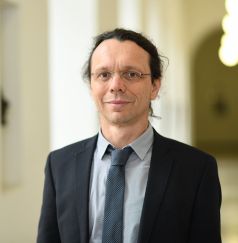
Dirk Ifenthaler is the Chair of Learning, Design and Technology at the University of Mannheim, Germany; the UNESCO Co-Chair on Data Science in Higher Education Learning and Teaching at Curtin University, Australia; and a Distinguished Professor in the Department of Applied Educational Science and Teacher Education at the University of Eastern Finland, Finland. Dirk’s research focuses on the intersection of cognitive psychology, educational technology, data analytics, and organisational learning. He received an honorary doctorate in educational science (doctor honoris causa) from the University of Eastern Finland in 2024. His previous roles include Professor and Director, Centre for Research in Digital Learning at Deakin University, Australia, Manager of Applied Research and Learning Analytics at Open Universities, Australia, and Professor for Applied Teaching and Learning Research at the University of Potsdam, Germany. He was a 2012 Fulbright Scholar-in-Residence at the Jeannine Rainbolt College of Education at the University of Oklahoma, USA. At the University of Latvia, Latvia, he was a Visiting Senior Researcher in the Faculty of Education, Psychology and Art. In 2023, Dirk was a Visiting Professor in the Dipartimento di Pedagogia, Psicologia, Filosofia at the University of Cagliari, Italy. In 2026, Dirk was a Visiting Professor in the Dipartimento di Storia, Science dell’Uomo e della Formazione at the University of Sassari, Italy. He is the Editor-in-Chief of Technology, Knowledge and Learning and Editor-in-Chief of Educational Technology & Society.
Chun Lai
The University of Hong Kong, Hong Kong
C6: ICCE Sub-Conference on Technology Enhanced Language Learning (TELL)
Supporting Learner Agency with GenAI
Agency, the capacity to purposefully and meaningfully act in a goal-directed pursuit to change oneself or one’s situations, is the origin of autonomous actions, hence a key competence in the GenAI era. Yet, learner agency is a contested issue due to the mixed blessings of GenAI in learning. On the one hand, GenAI holds immense promises for autonomous action and personalization, thereby amplifying learner agency. On the other hand, GenAI is often associated with overreliance and diminished independent thinking and problem solving, hampering learner agency. Algorithmic bias and manipulation may further erode learner agency. In this backdrop, supporting learner agency is fundamental to ethical and effective use of GenAI in education. Drawing upon theoretical conceptualizations and empirical studies on learner and AI agency, we will examine pedagogical initiatives on and identify key considerations in supporting learner agency on and with GenAI. Viewing learner agency as situated at the intersection of human, social structures, and technological systems, we argue for a systemic approach in supporting learner agency, creating favorable personal, socio-educational, and socio-technological conditions of possibility for positive co-evolution of learner and AI agency.

Chun Lai (Ph.D. Educational Psychology and Educational Technology, Michigan State University) is an Associate Professor at the Faculty of Education, the University of Hong Kong. Her research interests are technology-enhanced language learning, with a focus on self-directed language learning with technology beyond the classroom. She has published widely on this topic, including two books: Autonomous Language Learning with Technology beyond the Classroom (2018, Bloomsbury Publishing) and Insights into Autonomy and Technology in Language Teaching (2023, Castledown Publishers). She is the associate editor of Computer Assisted Language Learning, System, and Language Learning & Technology.
Roger Azevedo
School of Modeling, Simulation, and Training, University of Central Florida, United States
C3: ICCE Sub-Conference on Advanced Learning Technologies, Learning Analytics, Platforms and Infrastructure (ALT)
Metacognition in the Age of Generative AI: Leveraging Multimodal Data and Multimodal Learning Analytics to Transform Advanced Learning Technologies
Despite decades of research, metacognition remains among the most consequential yet difficult-to-observe constructs in educational science. Learners’ abilities to plan, monitor, regulate, evaluate, and reflect on their own cognitive processes profoundly shape outcomes in complex domains. This invited talk focuses on the central role of metacognition in next-generation Advanced Learning Technologies (ALTs). It shows how generative AI, multimodal data, and multimodal learning analytics can work together. The key contributions include: (1) presenting a theory- and data-grounded framework for modeling, detecting, and supporting learners’ metacognitive and self-regulated learning (SRL) processes in real time; (2) demonstrating how generative AI, especially large language models, can power adaptive pedagogical agents that prompt planning, monitoring, and reflection in response to learners’ changing needs; (3) using multimodal data streams such as eye tracking, log files, discourse, facial expressions, and physiological signals to capture and analyze metacognition in complex environments; and (4) exploring scalable platforms that integrate generative AI with multimodal analytics while upholding transparency, ethical data use, and learning sciences theory. The talk concludes by discussing implications for building transferable metacognitive skills and advancing AI-enhanced education.
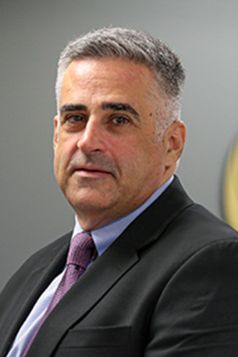
Dr. Roger Azevedo is a Pegasus Professor in the School of Modeling, Simulation, and Training at the University of Central Florida. He is also an affiliated faculty member in the Departments of Computer Science and Internal Medicine at the University of Central Florida and the lead scientist for the Learning Sciences Faculty Cluster Initiative. He received his PhD in Educational Psychology from McGill University and completed his postdoctoral training in Cognitive Psychology at Carnegie Mellon University. His main research area includes examining the role of cognitive, metacognitive, affective, and motivational self-regulatory processes during learning, reasoning, and problem solving with intelligent learning technologies such as intelligent tutoring systems, hypermedia, multimedia, simulations, serious games, immersive virtual learning environments, human digital twins, and simulated learners). He has published over 300 peer-reviewed papers, chapters, and refereed conference proceedings in the areas of educational, learning, cognitive, and computational sciences. He is a fellow of the American Psychological Association, the American Educational Research Association, and the recipient of the prestigious Early Faculty Career Award from the National Science Foundation. He was recently inducted into the Academy of Science, Engineering and Medicine of Florida.