
Paul Denny
The University of Auckland, New Zealand
C1: ICCE Sub-Conference on Artificial Intelligence in Education/Intelligent Tutoring System (AIED/ITS) and Adaptive Learning
Prompting, Probing, and Pacing: Adapting Computing Education for the Age of AI
Generative AI has rapidly transformed computing, presenting both complex challenges and exciting opportunities. At the professional level, debate continues about the future of software development: will AI largely replace human programmers, or will it enhance efficiency and drive demand for skilled professionals? In computing classrooms, where programming has traditionally been the foundation, the ease with which AI can now generate code has created an urgent need to rethink how we teach, learn, and assess programming. Grounded in large-scale classroom research, this talk explores new approaches that slow students down, encouraging reflection, critical thinking, and awareness of how and when they use AI. These approaches help ensure that AI enhances, rather than replaces, the learning that makes programming meaningful.
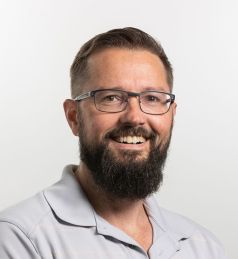
Dr Paul Denny is a Professor in the School of Computer Science at the University of Auckland, where he has broad research interests spanning computing education and educational technology. He has recently led multiple international initiatives on generative AI in computing education, and his published work has been recognised with 16 Best Paper or Paper Impact Awards and most recently ACM SIGCSE’s “Test of Time” Award. Paul has also been recognised for contributions to teaching both nationally and internationally, receiving New Zealand’s National Tertiary Teaching Excellence Award, the Computing Research and Education Association of Australasia Award for Outstanding Contributions to Teaching, and the QS Reimagine Education Overall Award.
Piet Kommers
The University of Twente, Netherlands
C7: ICCE Sub-Conference on Practice-driven Research, Teacher Professional Development and Policy of ICT in Education (PTP)
Title to come…
Abstract to come…

Piet Kommers is Emeritus Professor at the University of Twente. He was an early pioneer in AI programming and expert systems since the late 1970s. He became fascinated by the potential of adapting hypertext to the reader’s actual state of mind. Knowledge representation through conceptual structures became his key expertise. Currently, the exploitation of AI based upon machine learning and data analytics for smart educational support is at the core of his interest.
Chun Lai
The University of Hong Kong, Hong Kong
C6: ICCE Sub-Conference on Technology Enhanced Language Learning (TELL)
Supporting Learner Agency with GenAI
Agency, the capacity to purposefully and meaningfully act in a goal-directed pursuit to change oneself or one’s situations, is the origin of autonomous actions, hence a key competence in the GenAI era. Yet, learner agency is a contested issue due to the mixed blessings of GenAI in learning. On the one hand, GenAI holds immense promises for autonomous action and personalization, thereby amplifying learner agency. On the other hand, GenAI is often associated with overreliance and diminished independent thinking and problem solving, hampering learner agency. Algorithmic bias and manipulation may further erode learner agency. In this backdrop, supporting learner agency is fundamental to ethical and effective use of GenAI in education. Drawing upon theoretical conceptualizations and empirical studies on learner and AI agency, we will examine pedagogical initiatives on and identify key considerations in supporting learner agency on and with GenAI. Viewing learner agency as situated at the intersection of human, social structures, and technological systems, we argue for a systemic approach in supporting learner agency, creating favorable personal, socio-educational, and socio-technological conditions of possibility for positive co-evolution of learner and AI agency.
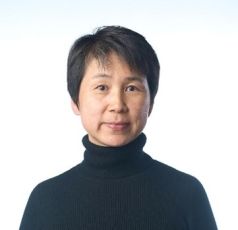
Chun Lai (Ph.D. Educational Psychology and Educational Technology, Michigan State University) is an Associate Professor at the Faculty of Education, the University of Hong Kong. Her research interests are technology-enhanced language learning, with a focus on self-directed language learning with technology beyond the classroom. She has published widely on this topic, including two books: Autonomous Language Learning with Technology beyond the Classroom (2018, Bloomsbury Publishing) and Insights into Autonomy and Technology in Language Teaching (2023, Castledown Publishers). She is the associate editor of Computer Assisted Language Learning, System, and Language Learning & Technology.
Sherry Hsi
BSCS Science Learning, California, United States
C4: ICCE Sub-Conference on Technology Enhanced Learning for Mobility of Learners and Learning Experiences (TEML)
Title to come…
Abstract to come…
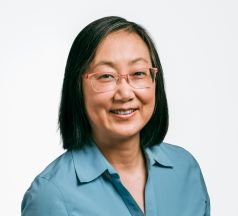
Dr. Sherry Hsi is a Principal Scientist at BSCS Science Learning, a nonprofit research and development organization dedicated to transforming science education through innovative curricula, rigorous research, and professional learning for teachers across diverse settings. Dr. Hsi’s research focuses on learning in out-of-school environments, where she designs and studies inquiry-based and craft-oriented experiences that foster agency, empathy, and creativity through the use of computationally-enabled materials and technologies. She has co-designed award-winning mobile apps, hands-on exhibits, craft-based STEM materials, and technology-enhanced curricula created in close partnership with K–12 teachers, youth, and science centers.
An early pioneer in mobile and wireless learning in museums, Dr. Hsi’s work in the late 1990s on location-aware mobile guidebooks helped shape how mobile technologies are used to support context-aware and personalized learning experiences. Since then, she has conducted research and development on how middle and high school students learn using IoT in science classrooms, sensor-based learning technologies and curriculum design for science camps supported by the U.S. National Science Foundation, the U.S. National Institutes of Health and the Fulbright Program.
Currently, Dr. Hsi leads the Making Waves with Radio project (radioeverywhere.org), which develops new youth-oriented STEM activities and experiences to teach Wi-Fi and radio frequency communications through partnerships with science centers and museums.